Most operations run on a patchwork: machines here, systems there, a few manual checks in between, and none of it talking. So you hear about problems late. IoT stitches those islands into one live view — here's how, in plain English.
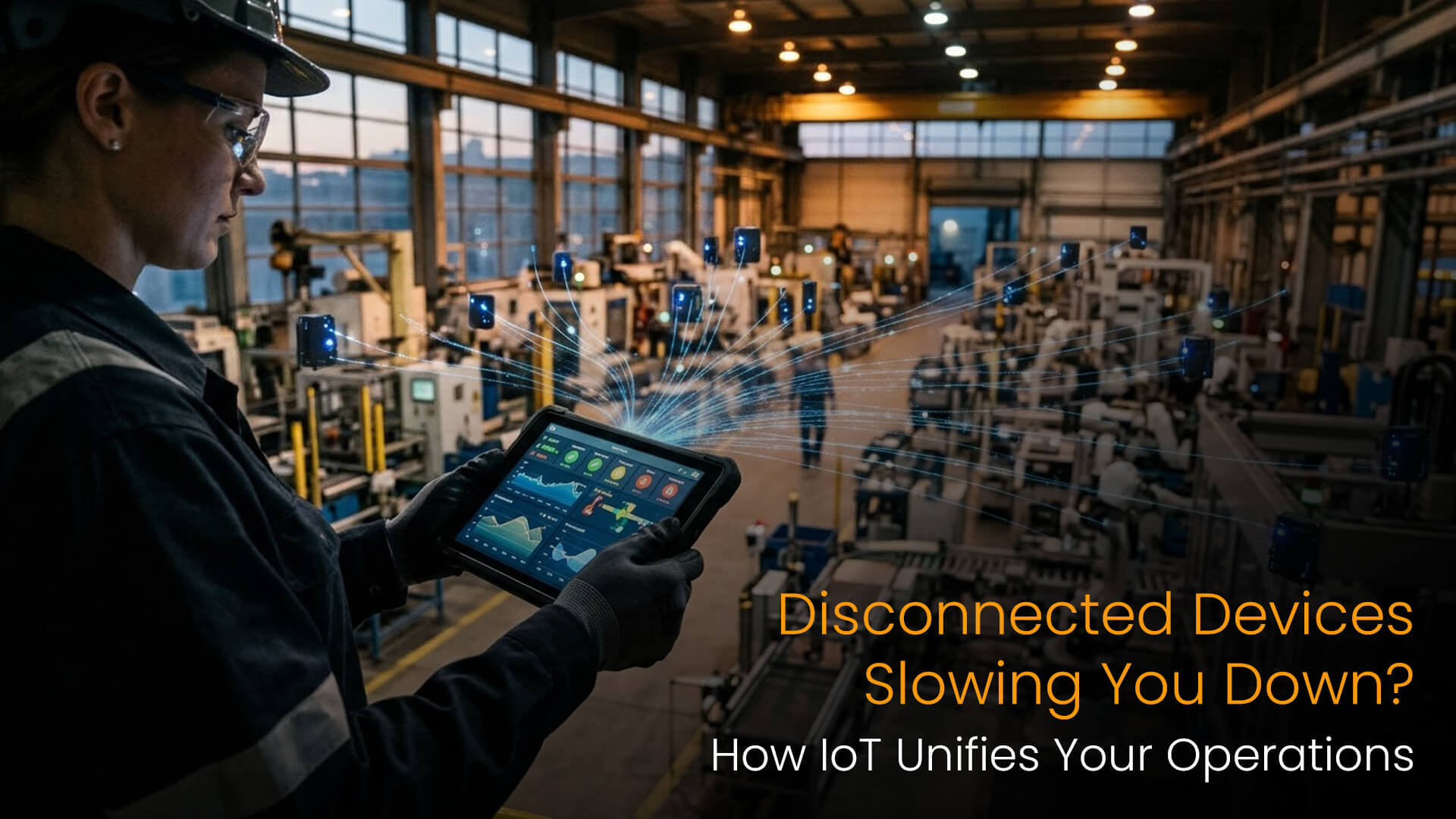
Walk through most factories, warehouses or facilities and you'll spot the same thing every time. Plenty of machines and systems. None of them talking to each other. One screen shows this, a logbook records that, a supervisor happens to know something else, and getting the full picture means asking three people and hoping what they tell you is still current.
Every piece works fine on its own. It's the whole picture that's missing. And this fragmentation costs more than it looks. You find out a machine failed when production stops, not before. You can't tell which assets are idle and which are flat out. Decisions get made off a monthly report describing a world that's already moved on.
IoT closes that gap. Connect the devices, and the islands turn into one map. You stop chasing information and start just seeing it. One honest caveat before we go further: IoT is for businesses where physical things matter. No machines, vehicles or equipment to monitor? Then this isn't your tool. Everyone else, read on.
Six things change the moment your devices are connected and reporting into one place.
One View of Every Device — no more silos. The real win of IoT isn't any single sensor. It's that all of them report into one place. Instead of separate screens, logbooks and people you've got to go and ask, you get one dashboard showing the status of every connected machine, vehicle or site.
Real-Time Visibility — live, not monthly. Connected devices report non-stop, so you see what's happening right now. Output dropping, a machine running hot, a delivery stuck in transit — you know as it happens, while there's still time to do something.
Alerts Before Things Break — predict, not react. Sensors catch the early signs of trouble long before anything actually fails. That shift, from reacting to breakdowns to heading them off, is often where IoT pays for itself.
Automated Responses — machines that act. Once devices are connected, they can respond too. A system can shut down equipment that crosses a safety threshold, reorder stock the moment it runs low, or nudge settings on its own.
Data That Feeds Better Decisions — numbers you can use. All those connected devices throw off a steady stream of real operational data: how assets actually get used, where the bottlenecks sit, which equipment keeps underperforming.
Remote Monitoring and Control — from anywhere. You can watch a plant, a fleet or a whole network of sites from one screen, wherever you are, and often act remotely too.
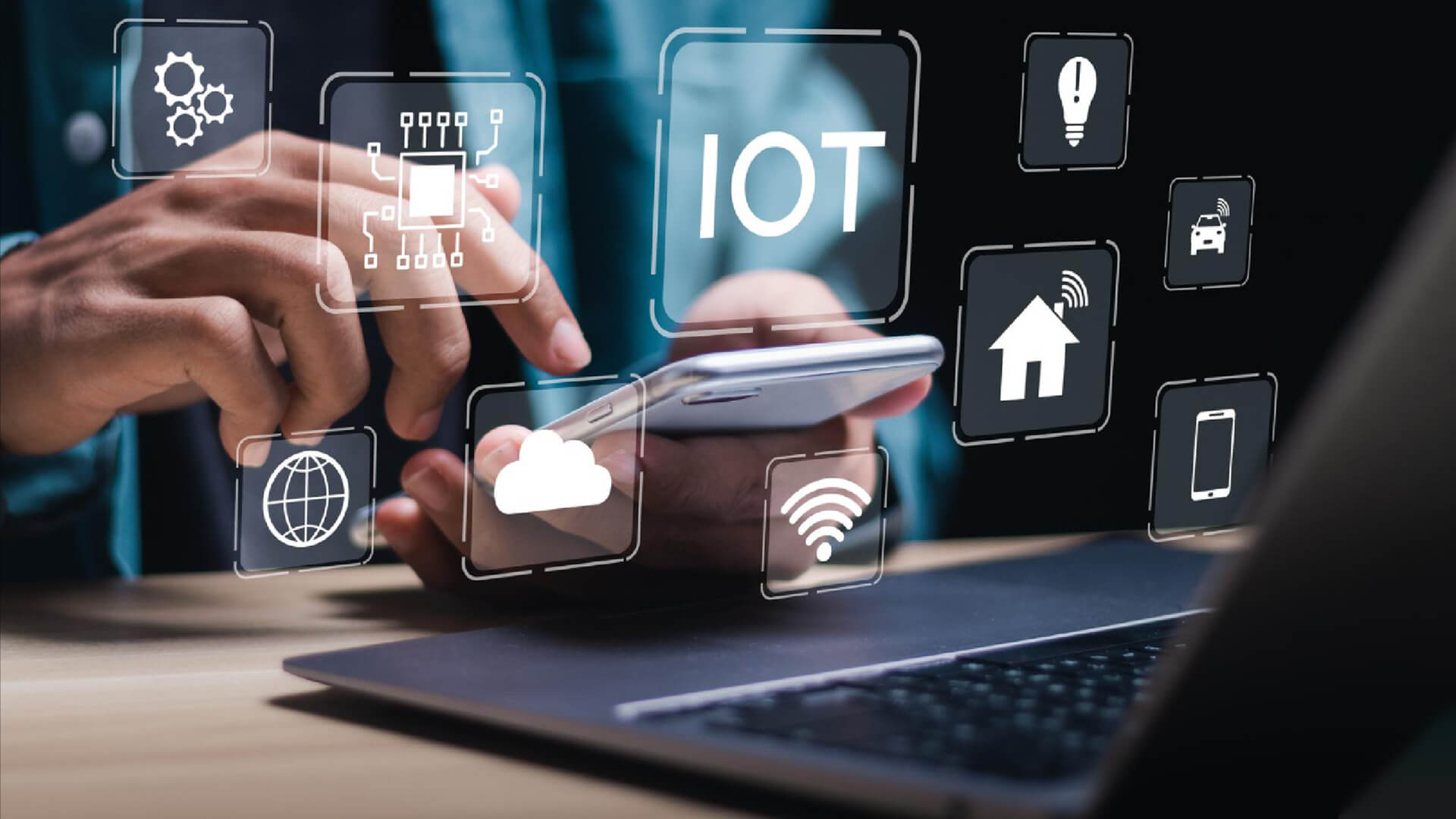
Illustrative view of how unified IoT connects scattered devices into one live operational picture.
The left column is a normal day in a disconnected operation. The right is what unification changes to.
| Disconnected Today | Unified With IoT |
|---|---|
| Each machine and system is its own island | One connected view across every device and site |
| You find out something failed after it failed | Early-warning alerts before a breakdown happens |
| Data is collected by hand, if at all | Sensors capture data automatically and continuously |
| Numbers only arrive in a monthly report | Live data, available the moment you need it |
| Someone has to be on-site to check status | Monitor and control remotely from anywhere |
| Problems are handled only after they occur | Automated responses handle routine issues instantly |
| No idea which assets are idle or overworked | Usage and performance visible for every device |
| Information scattered across tools and clipboards | One place, one current source of truth |
Three concerns come up in every single first IoT conversation. Here's the honest answer to each.
At Swaran Soft, we start with the equipment and systems you already have, retrofitting sensors rather than pushing new hardware at you. We design for security and India-hosted data from day one, and we kick off with one focused pilot so you see the value before committing to a full rollout.
Not every operation needs a full IoT platform. Here's how the levels stack up on what actually matters.
| Aspect | Manual / Disconnected | Basic Monitoring | Unified IoT | Usually Best |
|---|---|---|---|---|
| Visibility of operations | Fragmented, delayed | Partial, per device | Unified and live | IoT for whole-picture view |
| How data is collected | By hand, inconsistently | Some sensors, siloed | Automatic, continuous | IoT |
| Warning of failures | After it breaks | Limited | Early alerts, predictive | IoT |
| Remote control | None, on-site only | Rare | Yes, from anywhere | IoT |
| Automated responses | None | Minimal | Built in | IoT |
| Decision support | Gut feel | Basic readings | Rich, real data | IoT |
| Best suited for | Very small, simple setups | A single critical asset | Multi-asset, multi-site operations | Match to scale |
Illustrative comparison based on typical enterprise IoT deployment patterns — not a single client dataset.
Rough figures from a well-scoped IoT deployment. Results shift with the operation, so treat these as direction, not a guarantee.
Runs machines and lines where downtime is costly and visibility is patchy.
Pain: Only finds out about failures when production stops, and has no single view of what's happening across the floor.
Outcome: One live view of every machine, early warnings before breakdowns, and a lot less unplanned downtime.
Manages equipment and buildings, often across several sites, with manual checks.
Pain: Maintenance is reactive, teams drive out just to check assets, and small issues turn big before anyone notices.
Outcome: Remote monitoring of every asset, predictive alerts, and maintenance planned around real condition rather than guesswork.
Wants a clearer, faster picture of operations to make better calls.
Pain: Operational data lands late and scattered, so decisions lean on stale reports and instinct.
Outcome: A unified, real-time picture of the whole operation, plus a scoped pilot to prove the value before scaling.
"The value of IoT isn't the sensors. It's what happens when your operation stops being a dozen disconnected islands and becomes one thing you can actually see. That's the moment you go from reacting to running the place."
We map one high-value use case in your operation and scope a focused pilot — at no cost.
Find out whether IoT fits your operations, and where the first pilot should be.

AI Architect and Entrepreneur building India's Edge AI ecosystem. 25+ years in enterprise technology. Founder of Swaran Soft, Gignaati, and Copilots.in.